|
 |
|||

Department of Agriculture and Food Systems
|
||||
|
||||
|
|
|||
Department of Agriculture and Food Systems
|
||||
|
||||

|

|
Agribusiness Review - Vol. 12 - 2004Paper 2 Productivity in the Australian Dairy Industry *Tom Kompas and Tuong Nhu Che Tom Kompas, National Centre for Development Studies, Asia Pacific School of Economics and Government, Australian National University, Canberra, ACT and the Australian Bureau of Agricultural and Resource Economics, Canberra, ACT tom.kompas@abare.gov.au Tuong Nhu Che, Australian Bureau of Agricultural and Resource Economics, Canberra, ACT nhu.che@abare.gov.au AbstractAlthough the Australian dairy industry has performed well it has also faced considerable pressure over the past twenty years. A decline in the terms of trade and major structural change has provided added incentives for the industry to improve productivity. This paper constructs Tornqvist index values to measure and analyse movements in inputs, outputs, total factor productivity (TFP) and the terms of trade for the dairy industry as a whole and for each state over the years 1979 to 1999. Overall, there is clear evidence of a significant increase in the TFP index in the 1990s relative to the 1980s. However, in terms of fitted annual growth rates, there is also evidence of a productivity 'slow down' in the 1990s, with the principal exception of New South Wales. Average annual growth in dairy total factor productivity in Australia over the entire twenty-year period is 1.5 per cent, but decreases from 1.8 per cent in the first to 0.9 per cent in the second decade. In Victoria, the largest dairy producer, the growth in TFP in the second decade of the study is virtually zero, with poor weather conditions in the second half of the decade partly to blame. Much of the impressive growth in dairy output in the 1990s can thus be simply attributed to a growth in inputs. Index values for the terms of trade, the share of input costs in total costs and potential drives of productivity change are also examined. 1. IntroductionThe dairy industry is one of Australia's most important agricultural industries. The farm gate value of production in dairy ranks it as the third largest agricultural industry in Australia (behind wheat and beef), contributing roughly three billion dollars per year (ADC, 2001). In terms of value-added, the dairy industry is ranked among the top four of the largest processed food industries, providing an important source of employment in rural areas. It is also the largest processed food export industry, with export sales of processed milk and manufactured dairy products of $2.3 billion in 1999-2000 (ADC, 2001). Over the past twenty years there was a substantial amount of restructuring in this industry and especially so in the 1990s with a large increase in milk production and changes in government regulation. A decline in the terms of trade and considerable structural change has provided added incentives for the industry to improve productivity. Productivity growth is one important aspect of farm performance and is a measure of the gains from technological change and better or more efficient farm practices. Changes in productivity can be measured as increases in outputs using the same amount of inputs or by a process that generates the same outputs using fewer inputs. The precise measure of total factor productivity (TFP) used in this study is calculated using a Tornqvist index over heterogeneous groups of inputs and outputs. Dividing the Tornqvist index of total outputs by the Tornqvist index of total inputs generates a TFP index (as a cumulative growth index). Annual growth rates for TFP are derived by fitting a logarithmic trend line with annual indexed data. Section 2 of the paper provides a short overview of the Australian dairy industry and indicates several key summary statistics such as the number of farms, farm size and milk production by state. Section 3 details the nature of the Australian milk market arrangements and government regulations in each state, factors that directly influence the terms of trade for dairy products. Section 4 describes the methodology used to construct the measures of outputs, inputs, TFP and the terms of trade for each state and Australia as a whole. Section 5 indicates the data sources for estimation and the survey methodology. Section 6 presents the key results for Australia and the two most important dairy states, Victoria and New South Wales. Section 7 provides a comparison of performance across states in terms of the annual growth rate of TFP and the terms of trade. Section 8 indicates the major cost components in dairy and Section 9 concludes. Appendix A and B collect main statistics, detail survey methodology and give variable definitions. 2. Background to the Australian dairy industryAustralia has over two million dairy cows, producing around 10 billion litres of milk each year (ADC, 2001). The advantages of climate and natural resources allow production to be based mainly on year-round pasture grazing, although supplementary feeding with grains is becoming increasingly common, particularly in the last decade. Most dairy farming areas are located in high rainfall zones, where milk production depends on seasonal pastures. However, irrigation is important in northern Victoria, the Riverina in New South Wales and in parts of Western Australia and Tasmania. Australian dairy farmers continue to increase dairy output through improved pasture, feed and herd management techniques. In 1998-99, over 60 per cent of dairy farms were located in Victoria, 14 per cent in New South Wales, 12 per cent in Queensland, 6 per cent in Tasmania, 5 per cent in South Australia and 3 per cent in Western Australia (ADC, 2000). While seasonal conditions continue to have a large influence on yearly output, Australian milk production has increased dramatically during the 1990s. In line with a pasture-based production system, Australia's milk output follows a strong seasonal pattern, with production peaking in October/November. This seasonal effect is most pronounced in Victoria. In Victoria and Tasmania milk production depends mainly on pasture conditions with milk output typically lower during the winter months when pasture growth is reduced. In contrast, milk production in New South Wales, Queensland and Western Australia is more uniform throughout the year. The more uniform monthly distribution of milk production in these states reflects less seasonal patterns of pasture growth, differences in production and agronomic conditions and a greater dependence on the fluid milk market. Australian annual milk production has increased steadily in every state (Appendix A). It is generally thought that Australia has achieved a high growth rate of milk production in the 1990s largely as a result of improved cow yields and in more recent years increasing cow numbers (ADC, 2000). In recent years, less than 20 per cent of Australia's milk production has been used for the domestic fluid milk (drinking milk) market. The remainder has been channelled into the manufacturing milk sector to produce dairy products such as butter, cheese, milk powders and other products. Victoria dominates milk production in Australia, accounting for 63 per cent of the country's total milk production and 72 per cent of manufacturing milk production in 1998-99. However, manufacturing milk production has expanding greatly in all states, with market milk declining as a percentage of total milk production (ABARE, 2001). There has been considerable structural adjustment in the Australian dairy industry during the period 1979-99. The long-term trend indicates a movement towards larger farms both in terms of area and herd size. [1] The number of dairy farms has nearly halved between 1978-79 and 1999-2000 with this decline occurring in all states. However, total milk production has increased by approximately 70 per cent (Appendix A). From 1991, milk yields per cow increased at a very fast rate as dairy farmers increased the adoption rate of improved technologies and farm management practices, such as the use of supplementary feeding, improved cattle genetics and better pasture management (ABARE, 1999). Principal new technologies and dairy farm practices include enhanced feeds, fodder conservation, soil testing, fertiliser and drainage, enhanced herd and herd-health management and new milking sheds and equipment. Such extensive technological change must partly account for the increase in outputs and TFP. On average, during the last twenty years, the output of dairy farms has grown at a rate of 4.2 per cent per year. The growth rate of output has increased even more rapidly in 1990s at a rate of 5.0 per cent per year. Milk yields per cow have also increased strongly at approximately 2.4 per cent per year, and especially so in Western Australia and Queensland where imported genetically enhanced cows have generated high milk yields. Undoubtedly, genetic management and improved breeding practices have contributed significantly to the growth in total factor productivity. [2] Finally, new technology for milking sheds and equipment, especially sheds and equipment that correspond to the increasing scale of dairy farms, is another important factor contributing to high productivity growth. With this, it is also important to note that much of the gains in TFP in the 1980s may simply be due to the economies of scale associated with the clear tendency toward larger farms in terms of both area and herd size. The measure of the growth of TFP used in this study includes the effect of returns to scale, which in terms of a growth index seems especially important as an explanatory factor in New South Wales, but less so in Victoria. Based on varying natural conditions for milk production and the adoption of new technology, farm sizes in Australia have changed considerably among states and over time and average land area per property, or hectares per farm, has generally increased (Appendix A). In the favourable climate regions for dairy production (principally Victoria and Tasmania where most of the manufacturing milk is produced) farm size is relatively smaller and production is much more seasonal. 3. Dairy markets and government regulationsOver the period of this study the Australian dairy market was characterised by a range of regulatory and institutional measures which divided the raw milk market into two separate milk sectors: the market milk and manufacturing milk sector (ABARE, 2001). Separate arrangements applied to the marketing of manufacturing and market milk, despite the fact that milk of only one quality generally left the farm. On the whole, these regulations and policies were instituted for the purpose of affecting the supply and farm gate price of milk according to its end-use. Different regulatory policies in turn affect the terms of trade as well as production and the adoption of new technologies and hence TFP. The Commonwealth government provided assistance to the farm gate price of manufacturing milk throughout 1979-1999. Prior to 1986, assistance was in the form of a levy on domestic sales of dairy products that was paid to exporters of dairy products to increase their returns and encourage dairy product manufacturers to increase the quantity of their exports. The introduction of the Kerin Plan in 1986 changed the way in which the Australian dairy industry was supported and saw a reduction in the level of support. The previous levy was replaced by a levy collected from farmers on the production of milk paid to exporters of dairy products. Under the Commonwealth Domestic Support Scheme, introduced in 1992, annual payments were made to dairy farmers based on their production of manufacturing milk. The scheme did not attempt to regulate the supply of manufacturing milk, although it clearly had an impact on the production of milk in Australia and on resource allocation within the industry. Funds for payments from the scheme were generated via a levy on milk used to produce manufactured dairy products sold on the domestic market and a separate levy on milk used in the market milk sector. During the 1980s and 1990s, in most areas of Australia, state governments controlled the pricing and supply of milk for drinking (or 'market milk'). The arrangement segregated raw milk according to end use and guaranteed eligible farmers a fixed price for regulated supplies of market milk. The guaranteed farm-gate price for market milk was substantially higher than the average price paid for non-regulated milk supplies. In quota states (New South Wales, Western Australia and most of Queensland), farmers who held quota received an administered price for all milk accepted by their authorities for use as market milk. All other milk produced was paid at the manufacturing milk price (IC, 1991). Generally, these states were classified as market milk states since the majority of dairy farm revenue was derived from milk directly sold for use as drinking milk. Failure to deliver the designated supply of quota milk would result in a reduction in individual farm supply entitlement. Any surplus of milk produced above entitlement was sold as manufacturing milk. The farm gate market milk price exceeded the price that dairy farmers received for manufacturing milk (non-quota milk), with the manufacturing milk price generally varying in response to movements in the price of dairy products on world markets. In non-quota states (Victoria, Tasmania and South Australia) farmers received a weighted average price for all milk produced. These states were classed as manufacturing milk states as the majority of dairy farm revenue was derived from milk sold for the manufacture of milk products. The market milk price and the manufacturing milk price were weighted by their respective volumes in each month's production to determine the price received at the farm gate (IC, 1991). Returns from the fresh milk market were pooled and each farmer received payments depending on the percentage of milk used for market milk in each month (Topp et al. , 1989). The manufacturing milk sector was not subject to any government production controls. Dairy farm incomes within these manufacturing milk states thus tended to be relatively more variable since manufacturing milk incomes are derived from the sale of dairy products on world markets. From July 1, 2000 all state marketing arrangements were removed, resulting in an open market in fluid milk products with no further formal quantitative controls on the supply or price of domestic drinking milk. Currently, over 50 per cent of Australian milk is exported in manufactured forms, with 77 per cent of these sales destined for markets in Asia and the Middle East (ADC, 2000). The steady improvement in international trading conditions, improved Asian demand and efforts by Australian exporters to develop new markets has increased Australia's share of international trade in dairy products to 15 per cent in 1999/2000 (ADC, 2001). 4. Measuring Total Factor ProductivityEstimates of productivity growth for Australian dairy farms allow one to decompose the growth in dairy farm output over time due to changes in conventional inputs such as labour, capital and land, from the change in the overall growth in productivity as a residual. In general terms, the productivity of a firm or dairy farm can be defined as the ratio of the output(s) a firm produces to the input(s) it uses. When the production process involves a single input and a single output the calculation is straightforward. However, when there is more than one input (or output) in a production process a method for aggregating these inputs into a single index is needed in order to measure productivity. Once obtained, this indexed value of productivity, or total factor productivity (TFP), is thus a measure of the productivity of all inputs or factors of production, in terms of their combined effect on output, and is often accounted for by technological change or more efficient methods of producing output. Alternatively, partial productivity measures the productivity of a change in a specific input alone, such as labour, holding all other inputs and technology constant. While a useful measure of the effect of each input taken separately, partial productivity measures provide no indication of overall productivity. The most common chain-index method is a Tornqvist index, originating with Tornqvist (1936) and developed by Diewert (1976, 1981) and Caves, Chistensen and Diewert (1982a, 1982b). In basic terms, the concept of a Tornqvist index is straightforward. Since both inputs and outputs are measured in value terms an index is needed to construct real changes in the value of outputs and inputs, relative to a point of comparison or a base year, much like the construction of any price (or quantity) index. More formally, define the value share of the i th commodity (input or output) relative to the value of all commodities as
in base period s , for n goods, prices p and quantities q . The Tornqvist quantity index ( Q ) in log-change form for periods ( t - 1) to t is
for
The Tornqvist quantity index at t is thus
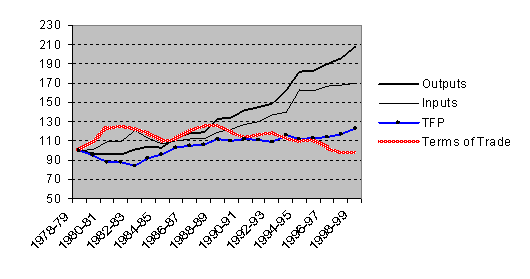
Using equations (4.2) and (4.3), a Tornqvist index can be calculated for both inputs and outputs, taken separately, base-normalized to 100 for all variables. The ratio of Tornqvist outputs to inputs is thus the measure of TFP. Comparable Tornqvist indexes can also be obtained for price variables, such as movements in the terms of trade. [3] Since the chain-indexed method normalizes all states and regions to the same initial starting point, direct level comparisons in TFP across states are not possible. Nevertheless, comparisons among growth rates in outputs, inputs, terms of trade and TFP across states (and within a state or region for levels and growth rates over time) are valid. Given Tornqvist indexes for outputs, inputs, the terms of trade and TFP, estimated annual growth rates can be obtained by OLS estimates as a fitted logarithmic trend line (for time t ). In practice, total factor productivity (unlike the terms of trade) is calculated in this paper using manufacturing milk prices only, as proxies for marginal cost prices. As such, the effects of non-constant returns to scale (if they exist) will also partly account for the changes in TFP (Knopke, 1988). There are a number of data and conceptual problems associated with this measure of TFP. Basically, the main aim of this study is to measure improvements brought about by changes in technical efficiency and better production methods. One of the major measurement problems relates to the effect of climatic variability on the TFP. For example in the short term, a severe drought will cause the TFP measure to fall, as the result of the use of more inputs (especially purchased fodder) and lower milk yields. Although systematic weather impacts can be expected to decrease the longer the time period involved, longer term trends in measured productivity can still be affected if rainfall over the start or end period are atypical. Another important uncertainty relates to any changes to the quality of the resource base over the measurement period. For example, if there are some resource costs associated with milk production (such as, salinity and soil erosion) that have affected the productive capacity of the land, these costs will not necessarily be reflected in the TFP measure. Obtaining the appropriate prices for outputs and inputs can also present problems. In the case of land, the price variable used is unlikely to be independent of productivity growth, and therefore does not allow for land values being partly influenced by expectations about the future productivity of that land. Other problems relate to the tendency of farmers to defer some input expenditures (such as capital purchases or repairs and maintenance) in low income years; measurement of the amount of capital used in the production process in any given year; and measuring quality changes (such as protein levels) in the milk produced. For this study, however, given the length of the time series data available (22 years) and the sample size for most estimates, the TFP measure is considered to be a reasonable approximation of the gains due to technological advance, enhanced efficiency and potential economies of scale. 5. Data sources for estimationThe two main sources for the database used in this study are estimates from ABARE's annual surveys of the dairy industry, 1978-79 to 1998-99, and ABARE's indexes of prices paid and received. ABARE surveys are designed and samples are selected on the basis of a framework constructed and maintained by the Australian Bureau of Statistics. The Australian dairy industry survey has been conducted annually since 1979. The relevant dairy establishments are defined under the Australian and New Zealand Standard Industrial Classification (ANZSIC) as being engaged mainly in the grazing, farming and the breeding of milk cattle (Australian Farm Surveys Report, ABARE, 1999). Survey methodology and variable definitions for inputs (including land, capital, livestock capital, labour, materials and services) and outputs (including milk and livestock sales) are detailed in Appendix B. 6. Key estimated results for Australia, Victoria and New South WalesKey estimated results for TFP and the terms of trade for Australia, Victoria and New South Wales are detailed at length in Tables 1 through 6. Estimates of partial productivity for each input in production (land, capital, plant and structure capital, livestock capital, livestock purchases, labour, material and services) are also reported. 6.1 Estimated results for Australia dairy farmsTaking 1978-79 as a base year for comparison (indexed at 100), there is a significant improvement in productivity in the Australian dairy industry in the 1990s compared to the first decade of this study (see Figure 1). In particular, from the first to the second decade, annual (average) total factor productivity for dairy farms in Australia increased from 97 to 114 (Table 1). Thus, in the second decade, the average index value for TFP is roughly 14 per cent higher relative to the base year. Figure 1: Outputs, inputs, productivity and terms of trade indexes for Australia
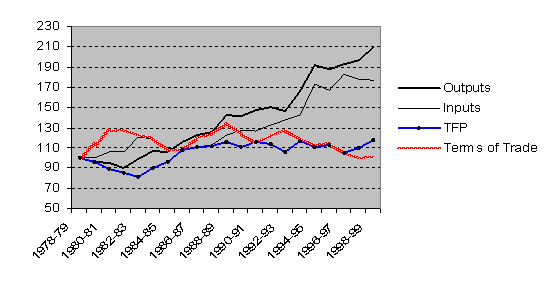
For Australian dairy farms, the Tornqvist output index grew at a rate of 4.2 per cent from 1978/79 to 1998/99. However, the growth in output was much higher (almost double) in the second decade, or 5.0 compared to 2.9 per cent (Table 2). The reason for much of this increase can be attributed to the increase in inputs over the period. The annual increase in the growth of inputs is more than three times larger in the last ten years (or 4.1 per cent) compared with a growth rate of 1.1 per cent in the first ten years. As a result, the annual growth rate of total factor productivity from 1978-79 to 1988-89 is 1.8 per cent. However, this rate slowed considerably to 0.9 per cent over the years 1989-90 to 1998-99, providing clear evidence of a productivity 'slow down' in the dairy industry. The growth rate in total factor productivity over the entire twenty-year period is 1.5 per cent. During the last twenty years output prices received by dairy farmers increased at 4.1 per cent per year. However, prices paid for inputs increased at a faster rate or 4.7 per cent per year, causing a decline in the terms of trade faced by dairy farmers at a rate of -0.5 per cent per year. From 1978-79 to 1989-90, both output and input prices increased at a relatively high rate (6.6 and 5.4 per cent per year), causing considerable variance in the terms of trade but with an overall positive growth rate of 1.2 per cent per year. However, in the second decade, output prices increased only slightly (0.8 per cent), whereas input prices increased at a rate 3.0 per cent per year. The result is a substantial decrease in the terms of trade, or -2.2 per cent per year in the last ten years. Partial productivity measures for land and plant and structures capital, livestock capital, livestock purchases and labour were all positive (Table 2). The results indicate that these inputs grew at a slower rate than output, possibly indicating that these were used more efficiently, or were combined with an embodied technology that is more efficient. The partial productivity measure for materials and services is an exception, with negative rate of growth at -0.7 per cent per year. The growth rate in materials (such as feed) clearly increased faster than the growth in output. The highest annual growth rate of input use was materials and services (5.0 per cent for the twenty-year period), and especially so in the second decade at a rate of 6.7 per cent per year (Table 2). It is clear that increased feeding (the main part of materials and services) is an important factor contributing to the high growth rate of output in the last twenty years, and especially so in the last ten years. There is also significant positive growth in land capital, plant and structures capital and livestock capital for dairy production. Nevertheless, the growth rate of livestock purchases was very low compared with the growth rate of output, perhaps indicating a stronger tendency to use artificial insemination and on-farm breeding. Part of the explanation for this tendency may be due to more restrictive quarantine measures, preventing livestock trade between states and regions to reduce the transfer of exotic animal diseases. In the last decade, in particular, quarantine measures have been more extensive and more rigorously enforced throughout Australia. 6.2 Estimated results for Victorian dairy farmsVictoria is the most important dairy state in Australia, accounting for about 60 per cent of total milk production in Australia. During the last twenty years milk production has been increasing over time and almost doubled in the 1994-99 period compared to 1978-84. During the study period the Victorian dairy industry is characterised by a decreasing number of farms, increases in average herd size and land area (Appendix A). Dairy herds in Victoria are mainly pasture fed and temperate climatic conditions allow for year-round grazing on permanent pasture. Supplementary feeding of grain is used as an aid to pasture management. Dairying takes place in the higher rainfall areas of the state (>700mm), namely the southwest, northeast and Gippsland regions, and in the irrigation areas of Northern Victoria and Central Gippsland . Production and milk yield per cow have increased substantially since 1985. In 1999-2000 the average milk yield was roughly 4,500 litres per cow. Three main regions produce the major part of dairy output for the state: the southwest areas, where production is mainly pasture based, with temperature climate conditions and rainfall mostly occurring in winter and spring; the Goulburn and Murray Valleys, where production is based almost entirely on irrigated grazing; and the Gippsland area, a relatively temperate and normally high rainfall area with rainfall mainly occurring in the winter and spring and where production is mainly based on grazing, with few farms using irrigation. Taking the 1978-79 as a base year, the growth indexes of output, inputs, total factor productivity and terms of trade are indicated in Figure 2. The average annual TFP index increased from 99 in the first decade compared to 112 in the second decade. The average annual index for outputs increased from 109 to 176. Inputs increased from 111 to 157 (Table 3). Figure 2: Outputs, inputs, total factor productivity and terms of trade in Victorian dairy farms
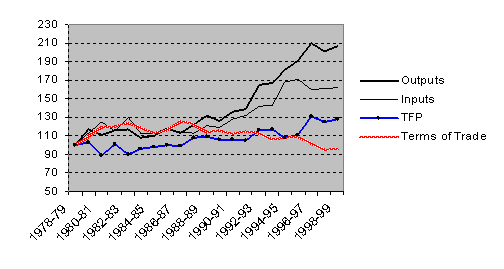
The annual growth rate of output has increased from the first to the second decade, or 3.8 per cent and 4.6 per cent respectively. However, the annual growth rate of TFP falls from 2.4 per cent in the first decade to virtually zero in the second decade (Table 4). Poor seasonal conditions in the second half of the 1990's may account for some of the poor performance in the second decade. From 1978-79 to 1998-99 output prices increased at 4.4 per cent per year and input prices increased at a rate of 4.8 per cent per year, causing the terms of trade to deteriorate at a rate of -0.4 per cent per year. The terms of trade decreased at a rate of -2.4 per cent in the second decade of the study. 6.3 Estimated results for New South WalesAs the second major dairy state (after Victoria) New South Wales contributes around 13 per cent of total milk production in Australia. Over the twenty-year period average annual milk production increased from 896 to 1184 million litres, although the annual average number of farms fell from 3312 to 1841 (Appendix A). There are two main dairy regions in the state: the coastal areas, the adjacent tablelands, the Hunter and Lachlan Valleys and scattered inland dairy farms, where production is mainly pasture based with some irrigation in the south and drier inland areas; and the Murrumbidgee Irrigation and Murray Valley areas. Taking the 1978-79 as a base year, the average annual index for TFP increased from 100 in the first decade compared to 116 in the second decade (see Figure 3 and Table 5). The growth in total factor productivity was 1.4 per cent from 1978-79 to 1998-99. In fact TFP increased significantly in this state from 0.9 per cent per year in the first decade to 2.2 per cent per year in the second decade. Output prices increased at 3.8 per cent per year and input prices increased at a rate of 4.5 per cent per year; consequently, the terms of trade deteriorated at a rate of -0.7 per cent per year from 1978-79 to 1998-99 (Table 6). Figure 3: Outputs, inputs, total factor productivity and terms of trade in New South Wales dairy farms
7. State comparisons for the growth in TFP and the terms of trade7.1 Annual growth rate of total factor productivityThe growth rates of outputs, inputs and total productivity over the period 1978/89 to 1998/99 for the dairy industry at the national and state levels are summarised in Table 7. The results allow for some rough comparisons among states and regions. It is important to recognise that most measures of interest vary considerably from the first to the second decade of the study. Table 1: Growth indexes for Australian dairy farms
Table 2: Estimated annual growth rates for Australian dairy farms
Note: * significant at the 5 per cent level. Table 3: Growth indexes for Victorian dairy farms
Table 4: Estimated annual growth rates for Victorian dairy farms
Note: * significant at the 5 per cent level. Table 5: Growth indexes for NSW dairy farms
Table 6: Estimated annual growth rates for New South Wales dairy farms
Note: * significant at the 5 per cent level. Thus, over the entire twenty-year period, Western Australia and Tasmania have the highest average increases in total factor productivity, but most of this increase is the result of productivity gains in the first decade alone. In the 1990s, New South Wales and South Australia have the highest rates of productivity growth. All other states, including WA and Tasmania , which performed well in the first decade, achieved less than a one-percentage increase in total factor productivity in the 1990s. The estimated values for productivity growth provide no direct explanations for the differences across Australia , but a number of likely explanations are clear. The slow-down in productivity in Victoria in the 1990s, for example, may be partly explained by poor seasonal conditions, particularly in the second half of the decade (ADC, 1998). The same applies to Tasmania, perhaps for much of the 1990s. In Western Australia , which appears to rely heavily on technological adoption (e.g., artificial insemination), the dramatic increase in productivity growth may simply be the result of starting from a small base. During this time the growth in output in WA was very small (and input growth negative), so that any increases in outputs relative to inputs will measure as a large growth in productivity. Although productivity growth on average in Australia falls considerably in the 1990s compared to the previous decade, South Australia and New South Wales stand out as clear counter-examples to this trend. The growth in total factor productivity in NSW is 2.2 per cent and in SA 1.9 per cent per year. The effect in South Australia may also be weather related, given periods of drought throughout much of the 1980s. In fact, productivity growth in SA in the 1980s is the lowest (by a good measure) of all the states, at a rate of -0.5 per cent. Applications of inputs during this period with little output gains (0.4 per cent) may have translated into large rates of growth (starting again from a small base) in the 1990s when weather conditions finally turned favourable. Indeed, for much of the sample period the indexed value of TFP in South Australia is below its base year value of 100. The effect in New South Wales on the other hand may have less to do with weather and more with input mix in dairy production. Although all areas increase the use of feed dramatically, there is also a tendency toward larger farm sizes in NSW relative to Victoria . Lower land costs and larger farm size may account for economies of scale in dairy production, and hence will be captured in the measure of total factor productivity growth. In the present study, over the periods 1978-79 to 1998-1999, the growth in total factor productivity in Victoria and New South Wales is roughly the same over the entire period, but New South Wales records a much larger TFP increase in the 1990s relative to Victoria. The effect of drought in Victoria, especially in the second half of the 1990's, is undoubtedly part of the explanation. [4] Table 7: Annual growth rate in outputs, inputs and productivity for Australian dairy farms 1978-79 to 1998-99 (per cent per year)
class=tableitalicChar> style='font-size:8.0pt'>Notes: The values of style='color:black;layout-grid-mode:line'>outputs, inputs and total productivity are estimated by log values of all indexes fitted against time. class=tableitalicChar> style='font-size:8.0pt'> style='color:black;layout-grid-mode:line'>* significant at the 5 per cent level. 7.2 Annual growth rate of the terms of tradeOver the entire twenty-year period, the terms of trade (or the ratio of prices received for outputs to prices paid for inputs) estimates as a negative rate of growth in almost every state (Table 8). The only exceptions are South Australia, with virtually no change in the terms of trade and Tasmania with a growth rate of 2.3 per cent. In the 1990s the terms of trade worsens for all States compared to the 1980s, and especially so for South Australia. Queensland, as principally a market milk state is the one exception, with a modest positive growth in the terms of trade in the 1990s of 0.4 per cent. The terms of trade in Tasmania falls less compared to other states as a result of a far less increase in the prices paid for inputs. Lower land use costs in Tasmania, in particular, appears to be a large part of the explanation. It is important to note that the terms of trade have improved considerably in the years just subsequent to this study, with an increase in the world price of milk and a fall in the value of the Australian dollar resulting in an increase in export prices received by dairy. Table 8: Annual growth rate of input, output prices and terms of trade (per cent per year)
* significant at the 5 per cent level. 8. Major input cost componentsNew technology and better farm management practices improve productivity by allowing for a more efficient or reduced amounts of inputs to produce a given level of output. Although there are twenty-eight inputs used in the construction of the Tornqvist input index in this study it is convenient to concentrate on three of most important input factors: land use, labour and feeding costs. The relationship between land use and feeding costs also highlights an important structural change that occurred in the dairy industry in the ten years to 1998-99. Figure 13 graphs the share of factor (input) costs in total input costs for land, capital, labour and feed in Australia over the twenty-year sample period. Generally speaking, land costs rise in the first decade, then fall through much of the 1990s. While capital costs remain relatively unchanged over the sample period, labour costs fall throughout. Feed costs rise dramatically in the 1990s. Land cost is the one of most expensive factors of production in the dairy industry. The cost of land capital as a share of total costs on Australian dairy farms increased strongly in the period from 1984-85 to 1993-94, but fell in the last six years. The natural conditions of pasture in each state is of course an important determinant of land costs, depending on quality of soil, climate, rain fall levels, irrigation and so on. Thus, land use costs in the relatively dry regions of Western Australia are higher on average than the eastern states. Table 9 indicates the share of land use costs in total input costs in each state over grouped five-year periods. Figure 4: Share of factor costs in total input costs: Australia 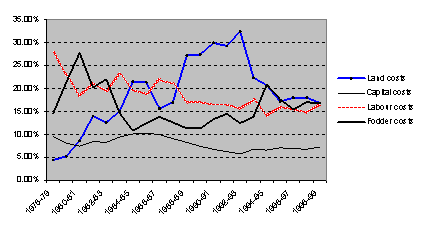 Table 9: Share of land use costs in total input cost
Sources: Complied from ADIS, ABARE survey data Clearly, effective land use is an important to improving productivity and reducing land costs can significantly contribute to productivity growth. Labour cost includes the cost of hired labour as well as the imputed value of operator and family labour. With increased mechanization the share of labour cost in total input costs has decreased gradually in every state from roughly 28.8 per cent in 1978-79 to 17 per cent in 1998-99 (Table 10). New technology in milking sheds and equipment may be largely responsible. Table 10: Share of labour costs in total input cost
Sources: Complied from ADIS and ABARE survey data While the share of costs for land and labour have both decreased, at least recently, there is a clear increase in feed costs as a fraction of total input cost throughout the twenty-year period and especially so in the last decade (see Table 11). In some states, such as Western Australia and South Australia, the increase in feed costs has been very dramatic. Table 11: Share of feed costs in total input cost
Sources: Complied from ADIS and ABARE survey data For all states and regions, the results in this study show that the partial productivity measure for materials and services (of which feed is the largest component by far) is negative. For example, in Victoria, the partial productivity growth rate is -2.5 per cent in the second decade and -1.0 overall (Table 4). Formally, this means only that the growth in outputs is less than the growth of this input. However, it would be useful to determine to what extent this considerable increase in feed, which clearly is a main factor in the increase in outputs, is cost effective. If not, productivity growth will be lower as a result. 9. Concluding remarksThis paper constructs index values to measure and analyse movements in inputs, outputs, productivity growth and the terms of trade for the Australian dairy industry over the years 1979 to 1999. The results are drawn from annual farm survey data compiled by ABARE from a sample of over three hundred dairy farms. Results are presented for Australia as a whole, each state taken separately, and with particular emphasis on Victoria and New South. Estimated results are shown to vary considerably between the first and second decade of the study. Additional measures for the growth of input use and partial productivity measures for each input in dairy farm production are also provided. Overall, for most states and regions, there is clear evidence of a significant increase in the TFP index in the 1990s relative to the 1980s. However, in terms of fitted annual growth rates, there is also evidence of a productivity 'slow down' in the 1990s. Over the twenty-year period, the growth in dairy farm output in Australia is estimated at 4.2 per cent per year. However, the growth in output in the second decade of the study is larger still, at 5.0 per cent, with substantial increases in all states. Much of the increase in the growth of output can be attributed to a considerable increase in the growth of inputs. Input growth over the twenty-year period is estimated at 2.7 per cent per year and at 4.1 per cent in the second decade, when much of the output growth occurred. For Australia as a whole, the terms of trade, as the ratio of prices received for dairy output to prices paid for inputs increased slightly in the 1980s, but fell considerably in the second decade of the study at a rate of -2.2 per cent. (This value has improved considerably in the years 2000 and 2001). For the entire twenty-year period, the terms of trade decreased at a rate of -0.5 per cent. In general, the growth of input-use is positive in all categories, but especially so in on-farm breeding of livestock and feed. In particular, the growth rate of the use of feed (the major component of listed materials and services) in Australia jumps from 2.7 per cent per year in the first decade to 6.7 per cent in the second. For the most part, there appears to be a clear substitution of feed for land capital in input-use, and particularly so in Victoria, New South Wales and Tasmania. In fact, in the second decade of the study, the partial productivity index for feed is negative in all states and regions, indicating that the growth in the use of feed is larger than the growth in dairy output throughout. Generally speaking, as a share of factor costs in total input costs, dairy land costs rise dramatically in the first decade of this study, then fall through much of the 1990s. While capital costs remain relatively unchanged over the entire period, labour costs fall throughout. Feed costs rise dramatically in the 1990s. As the results broadly indicate, changes in TFP may often simply be the result of good or bad seasonal conditions and their effects on outputs. This seems to be especially important at various points for Victoria, South Australia, Tasmania and New South Wales. For example, the clear slowdown in productivity growth in Victoria in the 1990s is generally thought to be the result of low rainfall, particularly in the second half of the 1990s. In South Australia, drought throughout much of the 1980s may largely explain why the cumulative growth index for TFP is below its base year value for much of the period. Favourable weather conditions in the late 1990s in SA thus account for at least some of the rapid increase in the growth of total factor productivity. Recent regulatory changes and financial pressures have induced dairy farmers to adjust and restructure their farm operations. Many have increased farm and herd sizes and adopted more intensive production processes to maintain real farm cash income. Assistance to dairy farmers provided under the Commonwealth Dairy Structural Adjustment Program, along with recent increases in the world price of milk and a favourable exchange rate, have also helped to maintain farm income. Indeed, Australian dairy farms have generally become larger and more productive over the past twenty years. Nevertheless, the productivity 'slow down' in the 1990s and horrible weather conditions lately challenge the industry to look for new ways to improve management practices and adopt better technologies in order to enhance productivity. Appendix A: Main statistics for the Australian dairy industry
Source: Australian Dairy Corporation, (ADC) (2000a and previous years); Compiled from Australian Dairy Industry (ADI, 1979-2001b), and ABARE Survey Statistics. Appendix B: Survey Methodology and Variables DefinitionsDairy farm estimates style='color:red'> cover establishments whose estimated value of agricultural operations (EVAO) was at or above some nominal minimum level in each year in which the survey was conducted. This minimum EVAO level did change several times during the time span of this paper. In 1998-99, the estimates covered establishments with an estimated EVAO of $22,500. Farms classified to a particular ANSIC industry and with a particular level of EVAO in one year do not necessarily maintain either that classification or that level of EVAO in the following year. Changes in industry classification can occur as a result of farm amalgamations, partial ownership changes and changes in enterprise mix within existing property boundaries. They may also occur as a result of changes in commodity prices. Relative shifts in commodity prices can result in a farm changing its industry classification with no change in farming practice. The data used are drawn from ABARE's annual surveys of dairy industries. If quantity variables are not available, they are derived by deflating survey data by the appropriate ABARE prices paid and received indexes. As far as practicable, the prices used are taken at the farm gate. Manufacturing milk prices are measured as the average manufacturing milk price in Australia. Actual prices received are derived by taking the ratio of milk income to total milk production. InputsInputs consist of 28 items that can be split into six major groups: land, plant and structure capital, livestock capital, livestock purchases, labour and materials and services. LandThe quantity variable used for land is the total land operated. The valuation includes the value of land and fixed improvements used by each farm business in the survey, excluding land share-farmed off the sample farm. Land costs are measured by the user-cost or the annual opportunity cost of using land. In this study the annual opportunity cost of capital used is calculated as the average of opening and closing value of capital multiplied by an annual real interest rate. CapitalCapital is defined as plant and structure capital, which includes buildings, machinery and vehicles and other capital stock items. The value of farm capital is the value of all assets used on the farm. Costs are defined by the user cost of capital calculated as a sum of deprecation and maintenance charges and the annual opportunity cost of the total capital value. Livestock capitalLivestock capital includes dairy, beef and other livestock. Livestock are valued at estimated market prices for the land use zones within each state. These values are based on recorded sales and purchases by sample farms and on information from state departments responsible for agriculture. The user cost of livestock capital is measured as the annual opportunity cost of livestock capital. Livestock purchasesLivestock purchases are split into dairy, beef and other livestock. Their value variables equal the purchases plus transfers, plus negative operating gains. The quantity variables for dairy and beef cattle are derived from the respective prices received indexes for slaughtered beef. For the relatively small category of other livestock, the quantity variable is derived from the value of purchases and a prices received index for livestock products. LabourLabour consists of two items, owner-operator and family labour, and hired labour. The value of the owner-operator and family labour input is imputed using weeks worked (collected during the surveys) and an award wage. The value of hired labour is wages paid. The quantity variables for owner-operator and family labour, and hired labour are weeks worked. Materials and servicesThere are eight items in the materials group: fertiliser, fuel, crop chemicals, livestock materials, seed, fodder, dairy supplies and other materials. There are six items in the services group: rates and taxes, administrative costs, repairs, insurance, contracts and other services. For each item in both groups, the value item is expenditure. The quantity variables are derived by deflating the expenditure on each by the appropriate prices paid index. OutputsOutputs consist of seven items that can be divided into four major groups: crops, milk sales, dairy and other livestock sales, and other farm income. The largest component of outputs (more than 90 per cent) comes from milk sales and livestock sales. Milk salesThe value variable for milk is total milk receipts and the quantity of milk is the litres of milk delivered. The manufacturing milk price is the average Australian manufacturing price. The actual price is a blended manufacturing and market milk price, which is calculated for each state. Livestock salesFor dairy, beef and sheep, the value variable is sales plus transfers out plus positive operating gains. For the minor category of other livestock, the value variable is sales. ReferencesABARE 1999, The Australian Farm Surveys Report , ABARE Project 1137, Canberra. --- 2001, The Australian Dairy Industry; Impact of an Open Market in Fluid Milk Supply, ABARE Report to the Federal Minister for Agriculture, Fisheries and Forestry, Canberra. ADC (Australian Dairy Corporation), 2001, Annual report , Melbourne. ADC, 2000, Dairy compendium, Melbourne. ADC, 1998, Dairy compendium, Melbourne. Caves, D. W., Christensen, L.R and Diewert, W.E., 1982a, 'Multilateral comparisons of output, input, and productivity using superlative index numbers', Economic Journal, 92 (1982), pp. 73-86. Caves, D. W., Christensen, L.R and Diewert, W.E., 1982b, "The economic theory of index numbers and the measurement of input, output, and productivity", Econometrica , 50, 1393-1414. Christensen, L.R., Jorgenson, D.W and Lau, L.J., 1973, "Transcendental logarithmic production frontiers", Review of Economics and Statistics , 55, 28-45. Diewert, W.E., 1976, "Exact and superlative index numbers", Journal of Econometrics , 4, 115-145. Diewert, W.E., 1981, "Duality approaches to Microeconomic theory', in The Handbook of Mathematical Economics , ed., by K.J. Arrow and M.D. Intriligator, Amsterdam: North-Holland. IC (Industry Commission), 1991, "Australian Dairy Industry", Report No.14-26 . Males, W. P., Davidson, H., Knopke, P., Loncar, T. and Roarty, M. J., 1990, Productivity growth and developments in Australian primary industries , ABARE, Canberra. Knopke, P., 1988, "Measuring productivity change under different levels of assistance: the Australian dairy industry", Australian Journal of Agricultural Economics , 32, 113-128. Lawrence, D and McKay, L., 1980, "Inputs, outputs and productivity change in the Australian sheep industry", Australian Journal of Agricultural Economics 24, 46-59. Topp, V., Williamson, G., Lembit, M and Beare, S., 1989, "The resource costs of blended milk pricing in Victoria", Paper presented in the 33 rd Annual Conference of the Australian Agricultural Economics Society, New Zealand. Tornqvist. L., 1936, "The bank of Finland's consumption price index", Bank of Finland Monthly Bulletin 10 , 1-8. * Thanks to the following ABARE colleagues for helpful comments and assistance with the data set used in this study: Dale Ashton, Steve Beare, Shane Brittle, Cas Johnson, Nico Klijn, Phil Knopke, Peter Martin, Cid Riley, Rhonda Treadwell, Vernon Topp and Walter Shafron. Susan McMeniman and David Spenser provided valuable research support. Financial support from the Dairy Research and Development Corporation is also gratefully acknowledged. The views expressed herein are those of the authors and do not necessarily reflect the views of ABARE. [1] Australia for several decades prior to 1976-77. Since the middle of the 1970s, the average milking herd size increased from around 81 cows in 1975 to over 200 cows in 1998-99. Total cow numbers increased by 13 per cent between 1978-79 and 1999-00, with the size of the dairy herd as of June 2000 equaling 2.2 million. In 1998-99, a quarter of Australian dairy farms ran fewer than 100 cows and about a quarter ran more than 200 cows. Over three-quarters of the farms running more than 200 cows were located in Victoria (ADC, 2001). [2] Another enhanced form of herd management is the improved control of mastitis and the overall use of mastitis control programs. Effective programs for the control and management of all diseases, such as Mastitis, Liver Fluke and BJD, can greatly influence milk production and total factor productivity. Better farm and herd-monitoring management is also undoubtedly important. [3] A Tornqvist index is 'superlative' in the sense that it is based on a highly flexible, homogeneous translog production function, providing a second order approximation to any arbitrary twice-differentiable and linerally homogenous production function (see Lawrence and McKay, 1980 and Christensen, Jorgenson and Lau, 1973). Among other properties, the index satisfies time reversal, indentity and strong proportionality tests and following Caves, Christensen and Diewert (1982a) can be extended to guarantee transitive multilateral comparisons. [4] In a comparable study (Males et al. , 1990) the annual growth in total factor productivity from 1967-68 to 1988-89 in Victoria was 2.2 per cent and in New South Wales 1.3 per cent. The results show considerable TFP gains in the 1970s. The more rapid increase in TFP in Victoria relative to New South Wales was attributed "to major policy differences between the two states. New South Wales has maintained a rigid quota system that has required increased expenditure on labour and fodder to maintain year-round production. In contrast, Victoria began phasing out milk quotas in 1978 and the industry in that state has been able to reap cost savings through more seasonal production patterns". |
|||||||||||||||||||||||||||||||||||||||||||||||||||||||||||||||||||||||||||||||||||||||||||||||||||||||||||||||||||||||||||||||||||||||||||||||||||||||||||||||||||||||||||||||||||||||||||||||||||||||||||||||||||||||||||||||||||||||||||||||||||||||||||||||||||||||||||||||||||||||||||||||||||||||||||||||||||||||||||||||||||||||||||||||||||||||||||||||||||||||||||||||||||||||||||||||||||||||||||||||||||||||||||||||||||||||||||||||||||||||||||||||||||||||||||||||||||||||||||||||||||||||||||||||||||||||||||||||||||||||||||||||||||||||||||||||||||||||||||||||||||||||||||||||||||||||||||||||||||||||||||||||||||||||||||||||||||||||||||||||||||||||||||||||||||||||||||||||||||||||||||||||||||||||||||||||||||||||||||||||||||||||||||||||||||||||||||||||||||||||||||||||||||||||||||||||||||||||||||||||||||||||||||||||||||||||||||||||||||||||||||||||||||||||||||||||||||||||||||||||||||||||||||||||||||||||||||||||||||||||||||||||||||||||||||||||||||||||||||||||||||||||||||||||||||||||||||||||||||||
 top of page
|
Contact the University : Disclaimer & Copyright : Privacy : Accessibility |
|
Date Created: 02 June 2005 |
The University of Melbourne ABN: 84 002 705 224 |
![The University of Melbourne [logo]](/template-assets-custom/images/custom_logo_crest_comb.gif)


 (4.1)
(4.1)  (4.2)
(4.2)  (4.3)
(4.3)  (4.4)
(4.4)